
Why Europe Needs a New China Lens
Summary
The world is entering a new geopolitical context, in which Europe urgently needs a more independent and realistic understanding of global power dynamics to defend its peace and prosperity. As one of the most consequential strategic actors of our time, China poses increasingly complex challenges across multiple fronts. Europe must develop its own strategic understanding of China.
China is a strategic actor unified under a highly centralised power, in which the Chinese Communist Party (CCP) exercises control over every politically and strategically significant instrument of power. Seeing this as its “institutional advantage”, the Party-state has persistently and consciously sought to outcompete liberal democracies through cross-sectoral, long-term approaches.
Europe’s underappreciation of China’s strategic nature has left it vulnerable. China’s national strategic moves have often been perceived and responded to by Europe as sectoral trade issues, leaving Europe facing an uneven playing field rooted in a deeper strategic asymmetry that it has struggled to recognise. Europe’s vulnerability in areas, such as critical raw materials (CRMs) and renewable energy, illustrates the cost of this misreading.
As China is applying the same playbook to pursue the next generation of strategic dominance in emerging technologies and new frontiers, Europe cannot afford to repeat this misreading. It needs a new China lens — one that understands the Party-state’s behaviour through its strategic logic — as the basis for a more strategic China policy.
Initiated by a group of China analysts in the United Kingdom and Germany, the Strategic China Policy Group was created to advance this new China lens. Through rigorous analysis grounded in Chinese primary sources, we aim to reconstruct the strategic logic behind the country’s behaviour and development and to derive insights that matter for Europe’s resilience and competitiveness.
This is a time of uncertainty and volatility. This is also a time for imagination and reinvention.
From globalisation and economic interdependence, to the rules-based international order and collective security, many assumptions that had for decades served as pillars of peace and prosperity in Europe are now under severe pressure. The belief that economic engagement would foster political liberalisation — most notably expressed in Germany’s Wandel durch Handel — has become a source of strategic vulnerability. International law is increasingly giving way to more blatant forms of power politics. Security guarantees once unquestionably anchored in the transatlantic relationship now appear more uncertain.
In this new geopolitical context, Europe urgently needs to develop a more independent and realistic understanding of global power dynamics — one that enables the continent to engage with the world more confidently while protecting the peace and prosperity its people deserve.
Contents
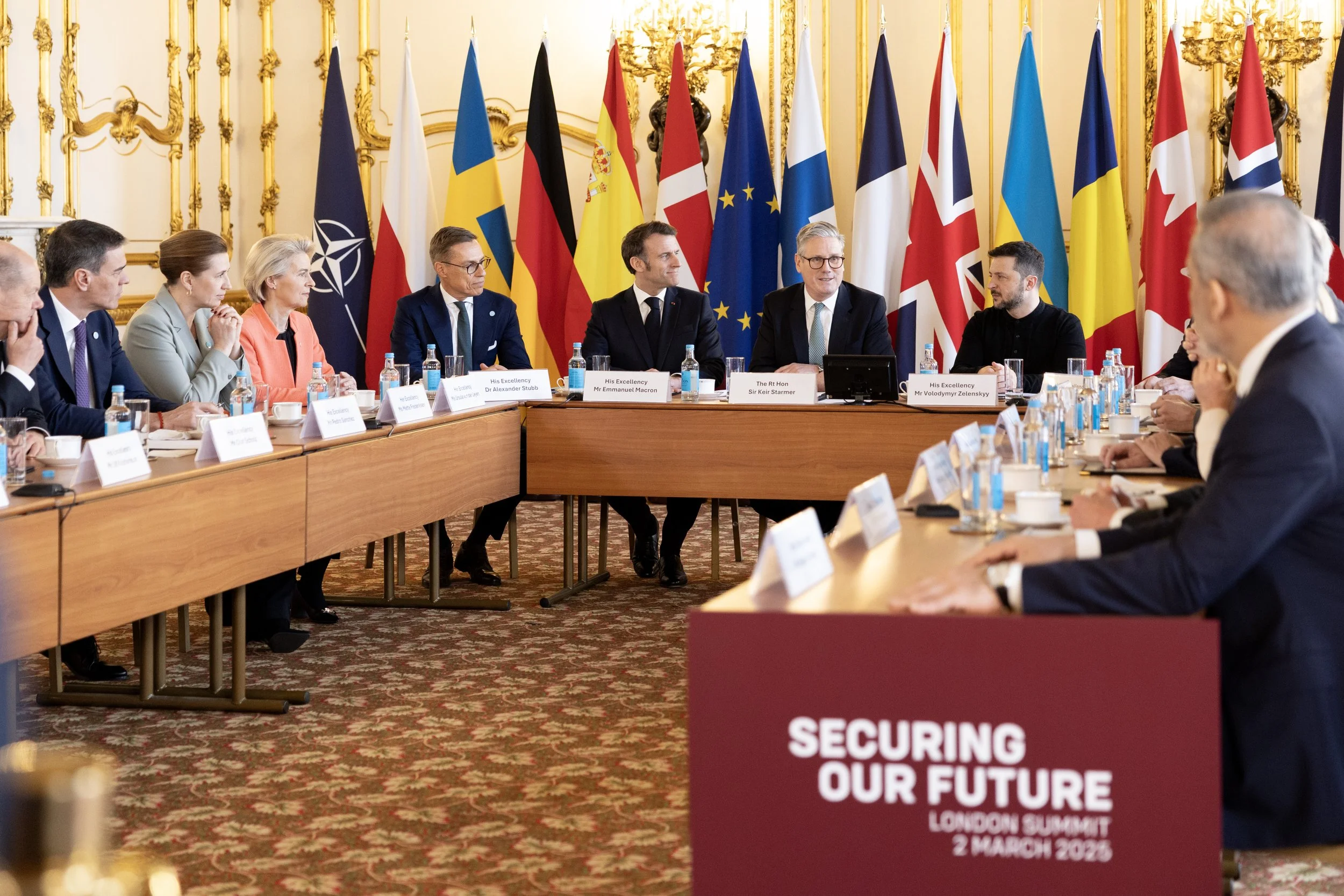
European leaders gathering in London on 2 March 2025 to discuss European security amid uncertainty in transatlantic relations (Source: 10 Downing Street)
The China Challenge
No serious understanding of this changing world can avoid the People’s Republic of China (PRC). As the world’s second largest economy, with nearly a third of global manufacturing capacity and expanding ambitions across political, economic, technological, and security domains, the PRC is already one of the most consequential strategic actors of our time. Its behaviour increasingly shapes the international order, norms, and values that European countries have often taken for granted since the end of the Cold War.
China’s direct impact on European countries is increasingly visible across multiple fronts. Trade with China has become one of the most salient concerns for European policymakers. The EU’s trade deficit with China reached over €360 billion in 2025, more than double the level in 2019, when the European Commission formally identified China as an economic competitor and raised concerns over the lack of reciprocal market access.
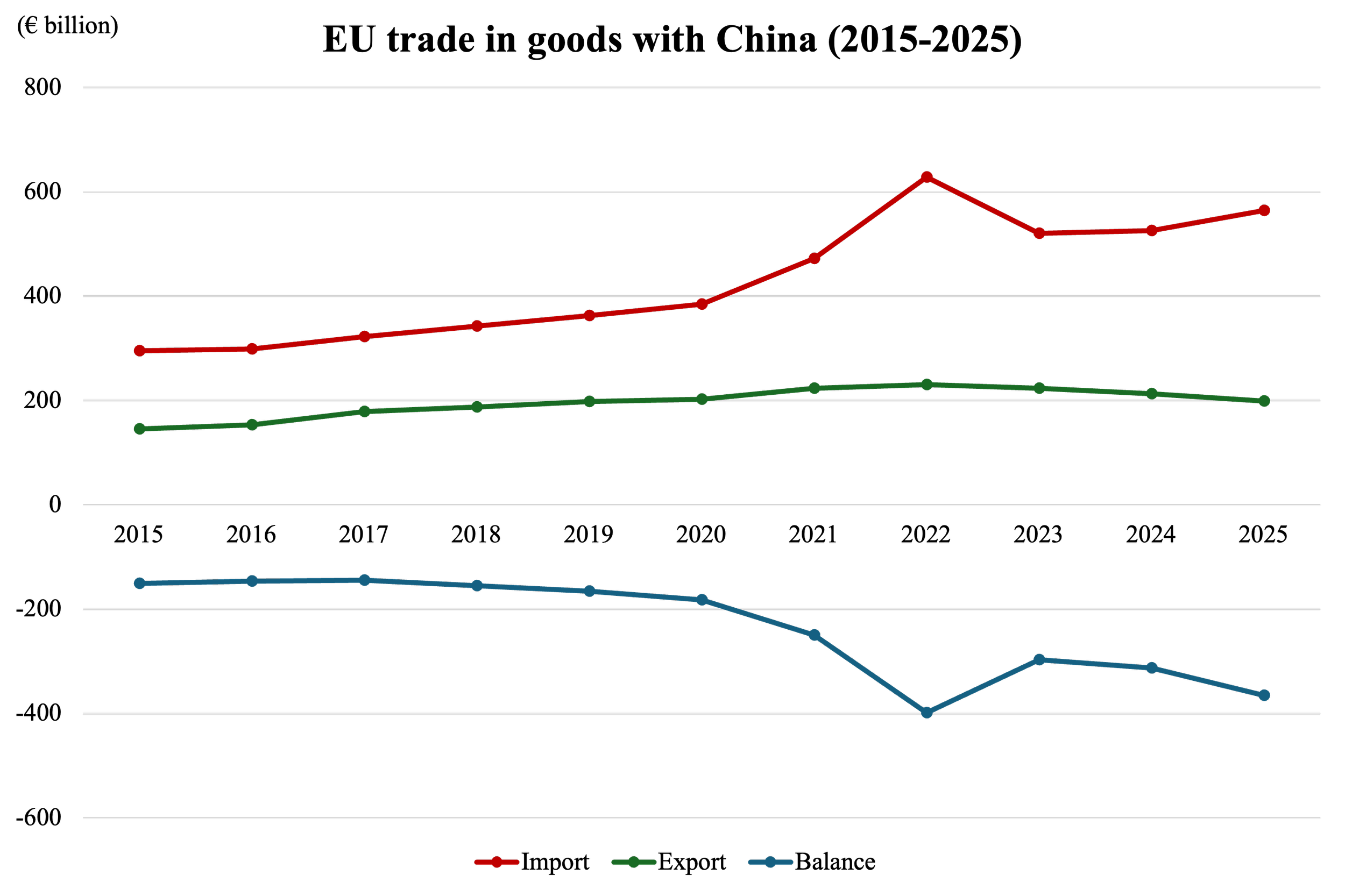
EU’s expanding trade deficit with China over the last decade (Source: Eurostat)
The problem is not merely one of volume. Driven by its technological ambitions, China’s manufacturing sector is moving up the value chain, bringing large amounts of low-cost Chinese goods into direct competition with advanced sectors central to Europe’s industrial base, including automotive, machinery, chemicals, and clean technologies. This has fuelled growing discussion of “China shock 2.0”: a new wave of export pressure driven not only by scale, but also by the technological upgrading of China’s industrial base. It is particularly consequential for export-oriented manufacturing economies such as Germany, where some analysts warn that manufacturing employment is falling by roughly 10,000 jobs per month under the shock. Over time, this pressure risks eroding European production capacity while embedding Chinese components more deeply into Europe’s industrial base, leaving the continent more reliant on Chinese supply chains.
Rising security challenges present another layer of China’s direct impact on Europe. Russia remains Europe’s most acute security threat. The PRC’s continued deepening ties with Russia across economic, energy, and technological areas, coupled with years of dual-use exports and training for Russian troops, demonstrate that the “no limits” partnership between the two countries is more than rhetoric, despite Russia’s ongoing war against Ukraine and aggression towards Europe. Beijing’s alignment with the Kremlin was made especially clear when China’s Foreign Minister reportedly told the EU’s top diplomat that Beijing could not afford to see Russia lose the war in Ukraine. Meanwhile, recent espionage cases across the United Kingdom, Germany, France, and Brussels, together with growing concern over China’s foreign information manipulation and interference, show that China has also emerged as a direct question for Europe’s national security and democratic resilience.
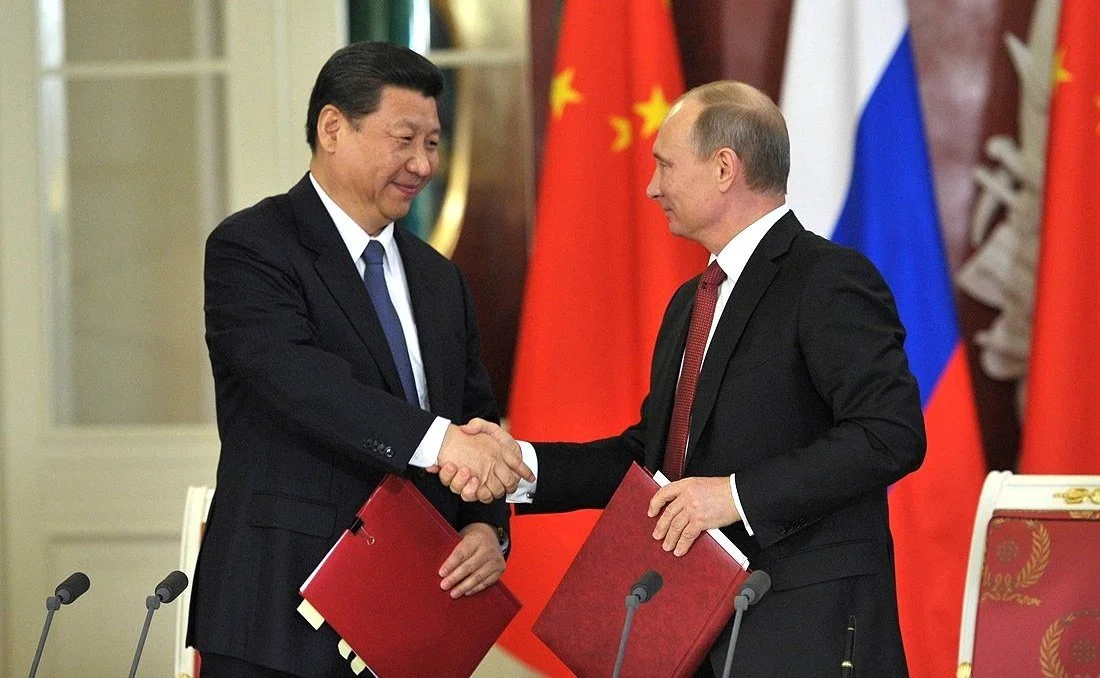
Chinese President Xi Jinping meeting Russian President Vladimir Putin (Source: Kremlin.ru)
European countries are increasingly aware of these comprehensive challenges. The UK’s Strategic Defence Review 2025 identifies China as a “sophisticated and persistent challenge”; Germany’s China Strategy and the European Council have both officially recognised China as a “systemic rival” and called for de-risking from critical dependencies. Subsequent efforts to strengthen economic security and counter external coercion further demonstrate Europe’s growing willingness to act accordingly.
Europe now sees China more realistically than it did during the high period of engagement just a decade ago. But this remains far from sufficient. Awareness of risks across multiple fronts does not necessarily reflect a strategic understanding of the actor behind them. The China challenge is not simply a collection of discrete problems. It is a challenge generated by an actor whose interests, values, and worldview differ fundamentally from those of its Western counterparts. As will be discussed later in this essay, Europe’s consistent misreading of China’s strategic nature and intent has repeatedly placed European countries in vulnerable positions across critical areas, contributing to much of the China challenge the continent faces today.
To navigate this challenge and strengthen its resilience and competitiveness, Europe needs a sharper lens through which to understand China as a strategic actor.
China as a Strategic Actor
China is a strategic actor unified under a highly centralised system, in which the Party controls every politically and strategically significant instrument of power. This places the logic of power in China outside many of the assumptions and political instincts formed within liberal democracies, where power is expected to be checked, periodically renewed, and constrained by civil society and independent institutions. This is not a groundbreaking observation, but many characteristics of this strategic actor that follow from this understanding often remain underappreciated in European policy discourse, despite their central importance for making sense of China’s strategic intent and behaviour. Several of those characteristics deserve closer attention.
The Primacy of Ideology
First and foremost, ideology sets China’s strategic direction, which the Chinese Communist Party (CCP) also sees as the source of its legitimacy to remain in power. While ideology receded as an explicit organising principle during the reform and opening-up period, it has returned as the primary framework of governance since Xi Jinping’s ascension to power. The 20th Party Congress Report reaffirms the Party’s ideology as the “foundational guiding thought” (根本指导思想) of the Party-state, urging cadres to place their “unwavering faith” (坚定信仰) in it.
In China’s context, this is more than abstract or rhetorical political language. In the constitutions of both the PRC and the CCP, to follow through the pathway of socialism is defined as the “fundamental mission” (根本任务) of the Party-state, where the country’s development must serve. The 2021 Opinions on Strengthening and Improving Ideological and Political Work in the New Era (关于新时代加强和改进思想政治工作的意见) makes the promotion of Party ideology an explicit responsibility across all levels of the cadre system, backed by assessment mechanisms that tie ideological performance to political career advancement.
Xi Jinping’s vision of the “great rejuvenation of the Chinese nation” (中华民族伟大复兴) is widely recognised as the driving force behind the country’s economic, technological, military, and territorial ambitions. But from Beijing’s perspective, these ambitions are all connected to the Party-state’s ideological supremacy, which, in its own language, is the “spiritual foundation” (精神之基) of national rejuvenation. In a 2016 speech, Xi emphasised the importance of upholding confidence in China’s own political path, theory, system, and culture — an idea formalised as the official doctrine of the “Four Confidences” (四个自信). Such confidence, he stressed, was a prerequisite for success across sectors and domains, through which China would demonstrate its “institutional advantage” (制度优势).
In this understanding, China’s national ambition is not only about advancing material power but, more importantly, about proving the superiority of its ideology through material achievements. This does not necessarily contradict the view of some observers that China is a pragmatic actor. China can be highly pragmatic at the operational level while remaining directionally ideological. This is reflected in the consistent emphasis on “core socialist values” (社会主义核心价值观) as guiding principles across policy documents and industrial guidance.
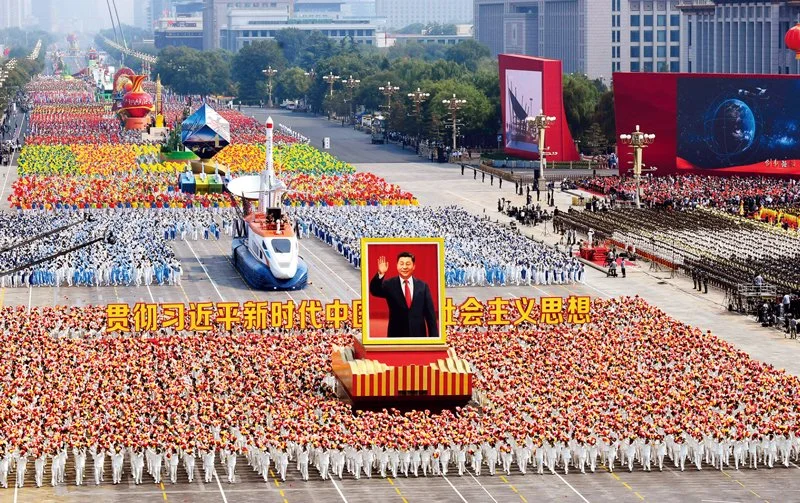
Parade in Beijing featuring a portrait of Xi Jinping and the slogan “Xi Jinping Thought on Socialism with Chinese Characteristics for a New Era” (Source: Qiushi)
Beijing’s quest for ideological superiority carries direct implications for how it perceives and manages external relations. From the Party-state’s perspective, China’s relationship with the West is not only defined by a realist understanding of great-power competition, it also contains an ideological layer. Xi Jinping once asserted that the “complete difference” in systems and ideology determines that the “struggle and competition between [China] and the West are irreconcilable.”
China’s ideology is fundamentally at odds with liberal democracy, a value Beijing considers to represent the interests of Western countries. Early in Xi’s tenure, in 2013, the CCP General Office of the Central Committee issued the Communiqué on the Current State of the Ideological Sphere (关于当前意识形态领域情况的通报), more commonly known as Document No. 9, warning cadres against “false ideological trends” (错误思潮) such as “Western constitutional democracy” and “universal values” of freedom, democracy, and human rights, portraying them as threats to the Party’s leadership and political system. Since then, Xi Jinping has repeatedly warned that democratic values promoted by “Western hostile powers” (西方敌对势力) could be subversive to CCP rule.
This ideological confrontation extends to China’s approach to the international order, in particular the liberal international order created to “make the world safe for democracy”. The PRC seeks to propagate its own values and norms within international institutions, and to redefine aspects of the international order in ways that better serve the interests of its domestic political system. It may not be a revolutionary state in the manner of the early Soviet Union, but it is revisionist in its ambition to reshape the normative environment in which the Party-state operates. Upholding Xi’s concept of “ideological security” therefore requires weakening liberal international norms and Western democratic influence where the CCP believes they could be used to subvert its rule in China.
“The Party Leads Everything”
While ideology gives China its strategic direction, the Party is the central power that unifies the country behind that direction. The Party is the institutional embodiment of its ideology. Wherever resources must be mobilised for the sake of national strategy, the Party takes the lead.
In China, the Party’s leadership is absolute and unchallengeable. In his closing remarks at the 19th Party Congress in 2017, Xi stated: “In Party and government, military and civilian, academic and other spheres — east, west, south, north, and centre — the Party leads everything” (党是领导一切的). At the core of this Party-led regime lies Xi Jinping, and him alone. In 2021, the Party’s Central Committee passed a historical resolution to “resolutely safeguard Comrade Xi Jinping’s position as the core of the Party Central Committee and the core of the whole Party” (党中央的核心、全党的核心地位), endowing him with the same historical grandeur as Mao Zedong and Deng Xiaoping.
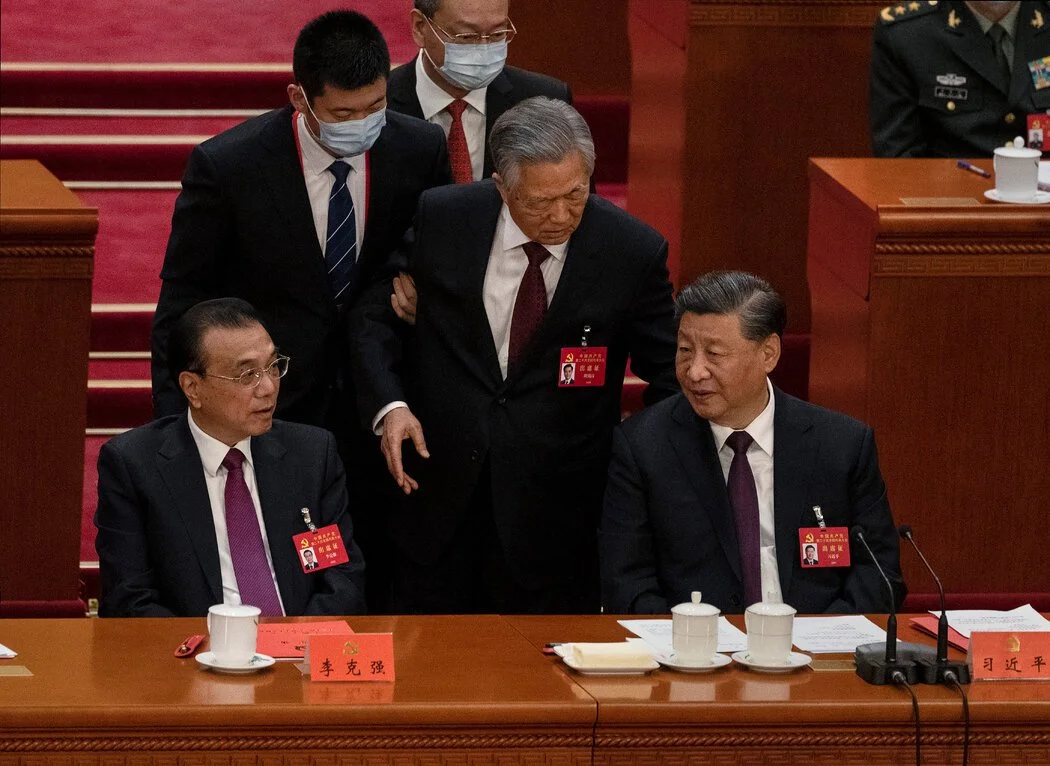
Former Chinese President Hu Jintao being escorted from the closing session of the 20th Chinese Communist Party National Congress (Source: Kevin Frayer/Getty Images)
Xi has reformed state institutions to anchor them more tightly around Party leadership, ensuring that the Party’s “top-level design” (顶层设计) — a centralised process of strategic blueprinting — precedes and constrains policy implementation. In the latest round of comprehensive reforms, the 2023 Party and State Institutional Reform Plan transferred responsibility for several functional areas, including finance, science and technology, and Hong Kong and Macao affairs, from the State Council to the Party Central Committee. The previous round of reform in 2018 established the National Supervisory Commission, operating from the same office as the Central Commission for Discipline Inspection, extending the jurisdiction of the Party’s disciplinary organ to all public officials, not only Party members.
This does not mean that China already has a perfect mechanism for policy coordination, which remains a challenge in governing a country as large and complex as China. It does mean, however, that the Party leadership is actively reshaping the system to move closer to this ideal of centralised coordination, with its more than 100 million Party members expected to vigorously advance this vision across their diverse fields of responsibility. In a 2023 seminar with senior Party cadres, Xi explained that “practical exploration” (实践探索) must be conducted within the confines of “top-level design”:
“Chinese-style modernisation is advanced in stages and across domains; realising the development goals of each stage and implementing the development strategies of each domain likewise requires top-level design. Conducting top-level design requires profound insight into the general trends of world development, accurate grasp of the shared aspirations of the people, and deep exploration of the laws governing economic and social development — so that the plans and policy systems we formulate reflect the character of the times, grasp underlying laws, and are rich in creativity, achieving integration of near- and long-term considerations, coherence from top to bottom, and coordination of content.”
This expectation is reinforced by discipline. From the beginning of his rule, Xi Jinping has used anti-corruption and rectification campaigns to instil obedience across the Party-state. These campaigns have removed political rivals, disciplined officials, and signalled that deviation from the centre’s line carries serious personal and professional consequences. Their reach has extended deep into the Chinese political system, including the highest levels of the People’s Liberation Army, where even senior officers elevated under Xi have not been spared. The result is a political climate in which dissent is increasingly costly and officials have strong incentives to demonstrate loyalty by aligning their work with the Party’s strategic priorities.
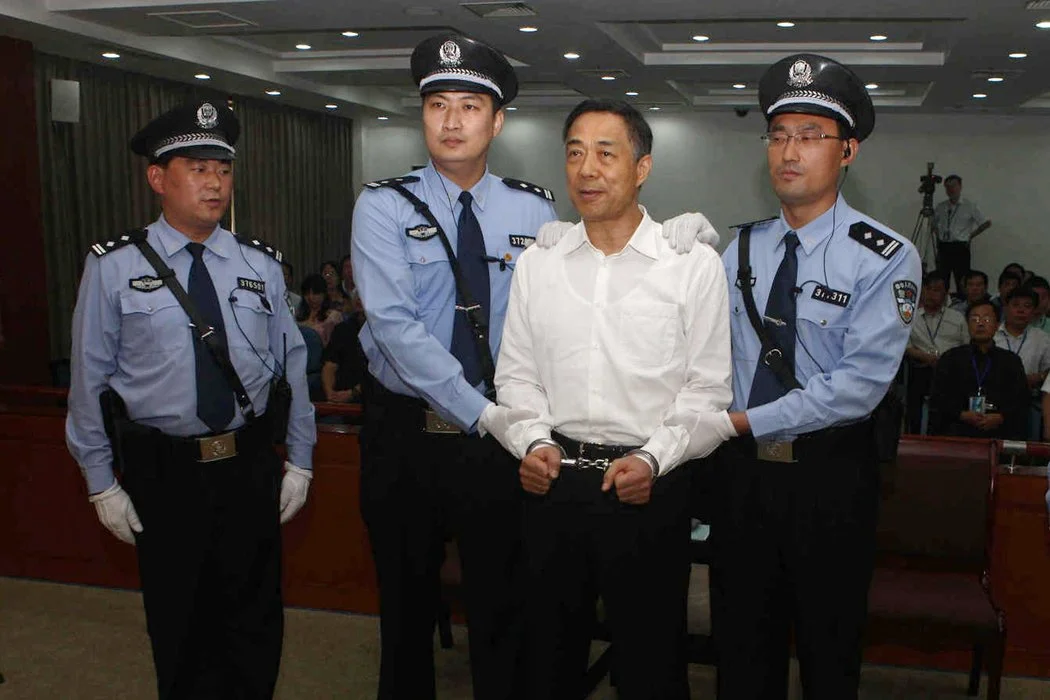
Bo Xilai, one of Xi Jinping’s most prominent potential political rivals at the time, being sentenced to life imprisonment in 2013. (Source: AFP/Getty Images)
This top-level design and cross-domain coordination reach deep into the private sector, which is driving much of China’s tech innovation. The 2020 Opinions on Strengthening United Front Work in the Private Economy in the New Era (关于加强新时代民营经济统战工作的意见) set a clear direction for strengthening political guidance and institutional engagement with the private sector, pushing private firms to align with Party priorities and contribute to “major national strategies” (国家重大战略). Subsequent crackdowns on companies such as Alibaba, Didi, and Tencent, as well as actions againstbusinessfigures who had publicly challenged state policies, helped deter businesses against diverging from the Party’s line. More recently, the 2025 Private Economy Promotion Law (民营经济促进法) further embeds Party-defined priorities into the operating environment of private enterprise, linking state support for private firms to their role in serving national strategic priorities.
These developments have together given the Party, with Xi Jinping at the centre, the capability to coordinate and mobilise resources at a scale that is difficult to replicate in liberal democracies — all in service of the Party-state’s strategic goal of national rejuvenation. In this light, military-civil fusion (军民融合, MCF) is not an exception to China’s system, but an expression of this wider logic. When resources are strategically significant, the distinction between military and civilian matters less than their usefulness to the Party-state’s objectives. The PRC’s strategic behaviour therefore cannot be understood through separate institutional or sectoral categories alone. Domains that appear distinct from the outside are often shaped by the same strategic priorities.
Strategic Patience
China’s ideological coherence and regime stability create the condition for a high degree of strategic patience, allowing strategic directions to endure over time. The absence of electoral turnover, combined with the Party’s central role in planning and mobilisation, gives Beijing a structural advantage in committing to long-term strategy.
This condition has been further strengthened under Xi Jinping. The PRC’s 2018 constitutional amendment removing presidential term limits weakened the expectation of leadership turnover and reinforced the political basis for long-term strategic continuity. This basis for strategic patience was later reinforced as a matter of political discipline. As Xi told Party cadres in the 2023 seminar, having the “correct” political standpoint is essential to sustaining a consistent strategy:
“...once a strategy is formed, it must be adhered to over the long term, seen through to the end, and carried to completion — it must not be changed at will. To achieve this, we must elevate our political standpoint, establish a global perspective, hold the ‘great affairs of the state’ in our hearts, connect history, present reality, and future together, connect China with the world, strengthen our capacity for strategic thinking, and ensure that the strategies we formulate accord with reality and prove effective, providing powerful strategic support for Chinese-style modernisation.”
Strategic patience is not unique to the Xi era. The CCP’s strategic vision stretches back decades before Xi’s rise. Rush Doshi’s The Long Game is one of the most authoritative accounts of the decades-long grand strategy China has pursued to challenge United States primacy, tracing its continuity across successive leadership generations.
The strategic patience in China’s approach to science and technology planning is equally striking. Analysis of CCP economic planning since the 1970s reveals that the core priority technologies — semiconductors, computers, renewable energy, passenger aircraft, and biotech — have remained relatively consistent, with new additions in emerging technologies as their strategic value becomes more evident. Rather than a sign of bureaucratic inertia, this remarkable consistency reflects an authoritarian regime that faces little real challenge to its “top-level design” and can commit to long-term planning.
This strategic patience must not be overstated as proof of the Party-state’s credibility or capability in realising all its stated goals. The inability of the country’s earlier Belt and Road lending model to generate sustainable financial and geopolitical returns offers a clear counterexample. Nevertheless, as will be discussed later in this essay, the unique condition that allows the Party to remain patient and play long games across multiple fronts has proven an advantage actively used by the Party-state to outpace its counterparts in various sectors. European actors should therefore take this consistency and the broader political logic behind it into account when interpreting China’s strategic behaviour.
China’s Strategy in Practice
China’s highly centralised political system allows it to wage strategic competition with ideological conviction, integrated coordination, and strategic patience — all seen by the PRC as an “institutional advantage” that it has persistently and consciously leveraged across multiple fronts. Yet too often, what China treats as national strategic moves have been perceived and responded to by Europe as sectoral trade issues, leaving Europe facing an uneven playing field rooted in a deeper strategic asymmetry that it has struggled to recognise. Europe’s vulnerability today in areas, such as critical raw materials (CRMs) and renewable energy, illustrates the cost of this misreading.
Critical Raw Materials
Beijing’s most potent trade weapon — its near monopoly over rare earth supply chains — was the culmination of a multi-decade playbook to dominate the lifeline of the global economy. Having witnessed the impact of OAPEC’s 1973 oil embargo on Western economies, the Chinese leadership soon learned the geopolitical significance of control over critical resources. Deng Xiaoping famously remarked in 1992 that “The Middle East has oil and China has rare earths” (中东有石油,中国有稀土).
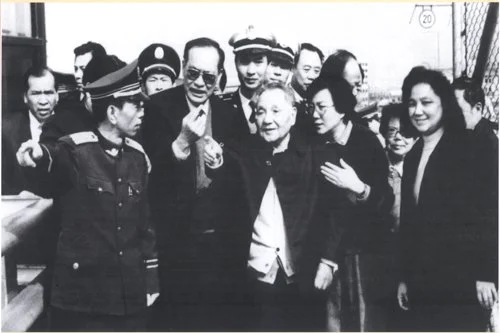
Deng Xiaoping during his Southern Tour in 1992, where he highlighted the strategic importance of China’s rare earths (Source: China National Radio)
The PRC began aggressively expanding its rare earths industry in the mid-1980s by encouraging exports and allowing local governments and state-owned enterprises (SOEs) to bypass environmental restrictions in extraction and processing. As the industry took shape, China waged a price war against international competitors, driving foreign mines in the United States and Australia out of business by the early 2000s.
Once China had priced out its competitors, Beijing moved to consolidate the industry around SOEs and bring it under direct state control. The State Council’s 2011 Several Opinions on Promoting the Sustainable and Healthy Development of the Rare Earth Industry (关于促进稀土行业持续健康发展的若干意见) set the stage for a four-year campaign to squeeze out the private sector, forcing existing companies to merge under six SOEs and placing the rare-earth industry under state direction. The document mandated the creation of strategic reserves, including the designation of areas where extraction was forbidden without government approval.
Soon after it established dominance in the sector, Beijing began converting market leadership into geopolitical leverage. China’s halting of rare earth exports to Japan during a diplomatic standoff in 2010 presaged its sweeping rare earth export controls against Western economies in 2025.
Europe has long misread the nature of Beijing’s agenda. Rather than treating Beijing’s resource strategy as a national strategic project driven by geopolitical considerations, the EU approached it as a trade dispute, seeing no need for a Commission-directed effort to build its own CRM stockpile or supply base to avoid escalating trade tensions.
This approach was mirrored at the national level. Germany’s 2010 raw materials strategy, for example, explicitly ruled out government stockpiling and left CRM supply lines largely to private companies, effectively pushing them towards deeper dependence on China.
While the PRC treated CRMs as strategic resources for strengthening its geopolitical bargaining position, Europe treated them as commodities governed by trade rules and firm-level procurement — an asymmetry that proved detrimental. From the 2000s onward, China absorbed environmental costs and financial losses that would have bankrupted private Western firms, waiting out the market until foreign competition was starved of viability. By the time the EU successfully challenged China’s crude trade restrictions at the WTO in 2014, the victory was already obsolete, as China had already secured effective control over the CRM sector. As a result, Europe’s dependence on Chinese CRMs has continued to grow, importing around 70% of its rare earths and 98% of its rare earth magnets from China in 2024.
Renewable Energy
China’s ascendancy in the global clean technology sector further illustrates the compounding power of top-level policy design fused with state-directed strategic patience. China’s photovoltaic (PV) industry received tax cuts, research funding, and low-interest loans under the 2006 Renewable Energy Law (可再生能源法) and the 2007 Medium- and Long-Term Development Plan for Renewable Energy (可再生能源中长期发展规划) in 2007.
Already the world’s largest PV manufacturer by 2008, the PRC launched the Golden Sun Demonstration Program (金太阳示范工程) in 2009 to boost domestic PV installations through large subsidies, pushing China’s global market share to new heights. In 2010, China accounted for an estimated 50% of global solar PV module production; by 2021, that share had risen to over 70%.
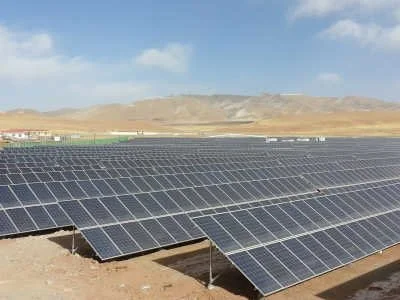
Solar photovoltaic power station in Qinghai developed under the Golden Sun Demonstration Program (Source: China Energy News)
As with rare earths, the state eventually stepped in not only to consolidate control but also to curtail “disorderly competition” (无序竞争) to ensure a more sustainable market leadership. The Golden Sun Demonstration Program was riddled with fraud because subsidies were tied to investment rather than actual installations, which encouraged companies to cut product quality in order to extract government support. In response, the State Council released the Several Opinions of the State Council on Promoting the Healthy Development of the Photovoltaic Industry (国务院关于促进光伏产业健康发展的若干意见) in 2013. By shifting toward feed-in tariffs (FiTs) and mandatory purchase quotas, state planners forced companies to improve product quality and reduce costs.
Beijing then reinforced the sector’s strategic status by designating new energy as a “Strategic Emerging Industry” (战略性新兴产业) in the 12th Five-Year Plan. This insulated the industry from policy and leadership cycles, even as global trade pressure mounted after the financial crisis. Further initiatives, including Made in China 2025, intensified state support and pushed the PV sector into severe overcapacity. These non-market interventions eroded profit margins to such an extent that Beijing had to launch an “anti-involution” campaign to curb excess capacity and restore the sector’s economic sustainability.
While the PRC used state direction, subsidies, industrial consolidation, and strategic patience to establish dominance across global solar supply chains, Europe again responded from a different premise grounded in liberal market principles. Some European countries clung to a non-discriminatory trading regime even as China’s conduct in the solar industry exploited such openness. The failure to protect domestic markets ceded Europe’s technological advantage and strategic initiative to China. Germany had been one of the earliest mass adopters of solar energy since the early 2000s, using FiTs to incentivise renewable electricity generation.
The problem was that the policy incentivised renewable energy deployment without securing the industrial base behind it. Since it did not distinguish between domestic and foreign supply, cheaper Chinese PV products flooded in to fill the rising demand in Germany. This resulted in a massive imbalance: Germany reached a historic high of nearly 70% of global PV installations in 2005 while manufacturing only 18% of its modules. By 2009, the EU accounted for 75% of global PV installations but produced only 18% of solar cells.
The EU failed to seize the opportunity to scale up its PV industry in the mid-2000s as solar energy became more affordable, accessible, and in greater demand. Some Member States not only overlooked the strategic logic behind China’s industrial policy, but continued to view China as a partner that could help deliver climate targets cheaply. Former German Chancellor Angela Merkel, for example, opposed trade restrictions and believed the dispute could be resolved through dialogue. Although the EU later temporarily imposed a tariff on solar panels from China, it reneged after just two months and instead opted for a minimum price mechanism. This did not stop Chinese products from flooding the EU market or prevent the collapse of European PV companies.
The pattern mirrored that of the CRM sector: China treated renewable energy technology as a strategic industry to build, protect and scale, while Europe treated it primarily as a trade issue and assumed that open markets would deliver cheap decarbonisation without strategic cost. That framing hindered a more realistic response to China’s industrial strategy and deepened the EU’s reliance on Chinese clean technology supply chains.
The Next Generation of Strategic Dominance
China is determined to pursue the next generation of strategic dominance. From emerging technologies such as artificial intelligence (AI) to new frontiers such as the Arctic, the Party-state is applying the same playbook that facilitated its rise to future arenas of geostrategic competition. This time, Europe must not repeat the mistake of waiting until vulnerabilities have widened and leverage has shifted before it responds.
Emerging Technologies: Artificial Intelligence
The PRC has prioritised AI development since the mid-2010s because of the technology’s potential to reshape the future of warfare and the international economic order. The State Council’s 2017 New Generation Artificial Intelligence Development Plan (新一代人工智能发展规划) served as a strategic blueprint for transforming China into an AI superpower, aiming to make China a “world-leading” AI innovation hub by 2030. Subsequent state policies, including the 14th and 15th Five-Year Plans, have reinforced AI’s importance in advancing China’s interlocking strategic priorities, ranging from achieving “technological self-reliance” (科技自立自强) to promoting “new quality productive forces” (新质生产力) — concepts central to the supply-side conviction embedded in China’s macroeconomic doctrine. The goal is not only to secure the foundations of AI innovation, but also to “seize the commanding heights of AI industrial application” (抢占人工智能产业应用制高点) to fuel China’s continued bid to become the world’s preponderant economic and technological power.
In addition to consistent strategic focus, China’s advantage also stems from its ability to coordinate and marshal state resources in a focused manner. According to one estimate, between 2013 and 2023, Chinese government VC funds invested up to USD 912 billion in AI, outspending the sum invested by U.S. and European industrial policies combined. The 2026 Budget, announced by the Ministry of Finance during the “Two Sessions” in March, continues this trend, pledging ¥426.4 billion of central government S&T funding for national laboratories and key state research institutions.
At the same time, Beijing has placed strong emphasis on commercialising AI innovation, strategically phasing in market forces to bolster economic sustainability and competitiveness. State-led research institutions, such as Tsinghua University and the Chinese Academy of Sciences, have produced numerous commercial spin-offs that tackle real-world use cases, with state-funded industrial zones like the Shanghai Mosu Space and Beijing’s Zhongguancun incubating thriving ecosystems of tech startups. Thanks to government support for spin-offs, AI innovation is no longer confined to laboratories dependent on state research funding but instead becomes commercial enterprises that could partly offset capital-intensive research and development (R&D) with revenue generation.
A decade of consistent and coordinated policy support has paid off for the PRC. In terms of AI model capability, China is the only country that has largely kept up with the U.S., having nurtured world-renowned AI companies such as DeepSeek, Zhipu, MiniMax, and Moonshot AI. China has also surpassed the U.S. on several indicators of research and industrial diffusion, including publication volume, citations, patent output, and industrial robot installations, according to the Stanford Institute for Human-Centered Artificial Intelligence. In the race to diffuse AI widely throughout the economy, China appears to be the frontrunner, aided by policies that pioneer AI adoption scenarios and emphasise open-source development.
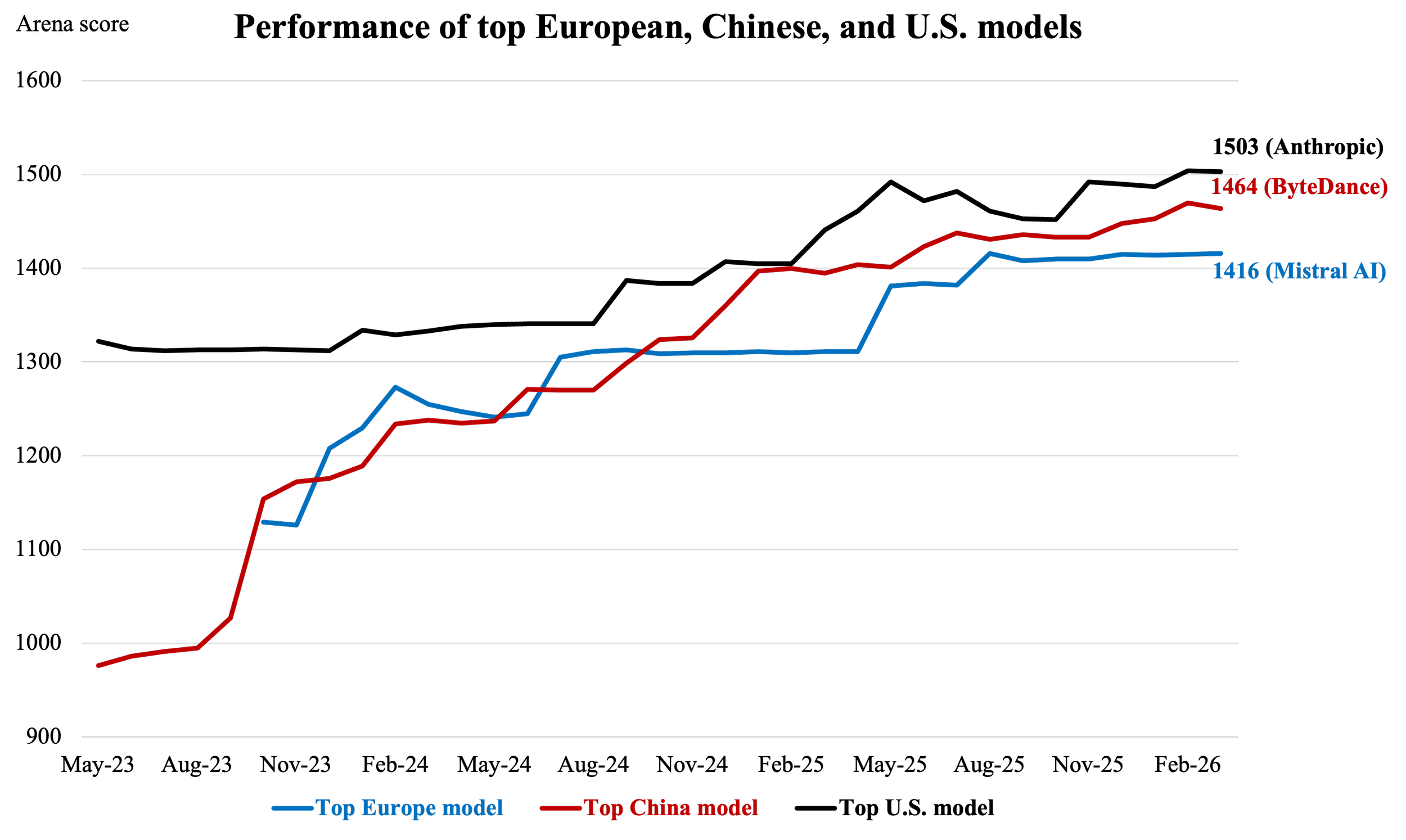
China’s narrowing gap with the U.S. in frontier AI model performance, with Europe gradually falling behind (Source: Stanford HAI)
The contrast between China’s breakthroughs and Europe’s lag could not be starker, as Europe remains hamstrung by the same problems that Beijing has largely mitigated. Although the EU has many talented innovators, the Draghi report points out that its failure “to translate innovation into commercialisation, and innovative companies that want to scale up in Europe are hindered at every stage by inconsistent and restrictive regulations.” The failure to consolidate the single market, especially the capital market, has also weighed down Europe’s competitiveness, driving high-growth companies overseas and limiting the depth of capital available for innovative startups.
As a result, Europe is so far behind in frontier AI development that it must rely on U.S. models for advanced capabilities — an increasingly risky proposition in light of the White House’s recent, haphazard export controls on Anthropic’s Fable and Mythos models. By remaining on the sidelines of the AI frontier, Europe is ceding the initiative to shape the future. A group of European AI researchers spell out the dire consequences: by 2031, failure to keep pace with AI development is expected to accelerate Europe’s “slide into irrelevance”, leaving the continent with little geopolitical leverage to fend off vassalage to the United States or coercion from China.
Strategic New Frontiers: The Arctic
The PRC has spent more than three decades gradually building its strategic presence in the Arctic and the High North, treating it as a “strategic new frontier” (战略新疆域) where international governance is still emerging and thus malleable to Chinese influence. The PRC recognised the long-term value of this remote region earlier than many other actors. While Chinese investment in the region is far less impressive than headline figures suggest, its scientific presence, institutional access, and active participation in regional affairs have helped expand its influence in the region.
China has chiefly focused on science diplomacy to establish and expand its polar presence, exploiting Northern European openness to scientific cooperation. Some Chinese scholars envision “science diplomacy” (科学外交) as China’s entry ticket into polar governance and a means of advancing national interests. It has cultivated “strategic scientists” (战略科学家) — leading specialists who can shape the institutions governing critical fields — to help define the rules and institutions of Chinese polar governance.
As Beijing began to recognise the region’s potential in energy, fisheries, and shipping, it shifted its focus from scientific observation to strategic and national security planning. This is reflected in the 2015 National Security Law, which views polar security as integral to its military, economic, and resource interests alongside technological advantage, environmental governance, and international influence. Beijing has stated its objective clearly: to “move from being a polar great power to becoming a strong polar nation” (由极地大国向极地强国), shifting from an expanded regional presence to active participation in regional governance.
While Europe is alert to China’s self-designation as a “near-Arctic state” (近北极国家) and Sino-Russian strategic opportunism, the continent still mainly treats China’s Arctic presence primarily as a matter of climate and research cooperation. Meanwhile, the lack of an integrated Europe-wide approach made it vulnerable to China’s “divide and conquer” approach, which seeks to engage European states bilaterally rather than confronting a coordinated European position. Chinese policy research identifies the Nordic countries as a breakthrough point for entry into Arctic governance. A researcher at the Xi Jinping Thought Research Centre now describes the Nordic countries as key diplomatic priorities and calls for “blue partnerships” (蓝色伙伴关系) and “green development partnerships” (绿色发展伙伴关系) in Arctic shipping, deep-sea exploration, climate change, and biodiversity. In Beijing’s strategic calculus, the Nordic states are the designated extension of the Maritime Silk Road into the High North.
Through patient engagement, China managed to make tremendous inroads with the Nordic countries. Norway hosts China’s first Arctic research station, the Yellow River Station (黄河站), on its Svalbard archipelago; Finland helped build China’s Xuelong 2 icebreaker; and Iceland has grown into one of China’s most important Arctic partners since Premier Wen Jiabao’s visit in 2012. Iceland backed China’s bid for Arctic Council observer status, signed trade and economic cooperation deals with China, became the first Arctic state to collaborate with China on marine and polar research, and jointly established the China-Iceland Aurora Observatory in 2018. These relationships were assembled gradually over more than a decade, through incremental steps that attracted limited European scrutiny. The risk is not simply that Europe misreads China’s Arctic strategy, but that it helps build the infrastructure through which that strategy advances.

China’s Yellow River Station in Svalbard, Norway (Source: Xinhua)
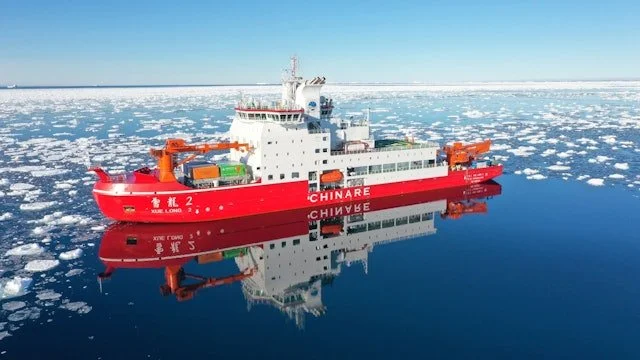

China’s Xuelong 2 icebreaker (Source: HK01)
The commercial significance of this long-term positioning is now becoming more visible. In 2025, the first China-Europe Arctic container service began operating through the Northeast Passage to Felixstowe, Rotterdam, Hamburg, and Gdansk. Chinese state media framed the route as injecting “ice-borne momentum” (冰上动能) into China-Europe trade and providing support for “Made in China” (中国制造) and the “going-out strategy” (出海战略). Inland manufacturing centres such as Yiwu are to be linked through an integrated Polar Silk Road and China-Europe rail corridor (中欧班列), forming a combined sea-rail channel that connects Chinese production directly to European ports.
China’s Arctic ambitions will only become more consequential for Europe. Gradually departing from its designation as a zone of peace, the Arctic is no longer a remote or peripheral region, but part of Europe’s northern flank, with growing relevance for critical infrastructure defence, military surveillance, and maritime access. As global warming alters the frozen landscape, the governance structures, scientific institutions, and dual-use infrastructure emerging along that flank increasingly involve a great power whose interests do not always align with Europe’s own.
Some European states have begun to recognise what is taking shape, but this awareness remains uneven. Sweden’s 2026 Arctic Strategy is one of the few European documents to identify the Arctic as a long-term strategic interest for China and to acknowledge Beijing’s development of dual-use capabilities in the region, including satellite systems, icebreakers, and nuclear-powered submarines. Describing itself as the nearest non-Arctic neighbour, the UK recognises its position astride the Greenland-Iceland-UK (GIUK) gap, a critical maritime chokepoint in the High North. Nevertheless, it struggles to reckon with the shifting security implications of China’s expanding footprint in the region. In a February 2026 speech, the UK former Defence Secretary John Healey singled out Russia as the gravest Arctic threat since the Cold War, but failed to mention China.
Unless European leaders learn to read China’s Arctic activity as part of a coherent long-term strategy, they risk finding the region’s rules and infrastructure already shaped before they can develop a sufficiently strategic response.
The New China Lens
China is a strategic actor unified under a highly centralised power. The primacy of ideology drives the Party-state to act in a largely coherent strategic direction; the centrality of the Party leadership across the country gives Beijing the capability to mobilise cross-sectoral resources to support its strategy; and together, they create the conditions for the patience necessary to design and implement a long-term strategy.
The same playbook that China uses to achieve global dominance in areas with strategic significance, such as CRMs and renewable energy, is now being applied to pursue the next-generation advantages for the Party-state in emerging technologies and strategic new frontiers.
As China plays a long game to pursue strategic advantages across multiple fronts, so too should Europe approach the task of navigating the challenges it creates — and Europe has not yet lost its stake in shaping the strategic landscape ahead. But to defend that stake, Europe must develop a more strategic China policy, grounded in a thorough understanding of the strategic nature of the Party-state.
Europe does not lack expertise on China. On the contrary, it has a wide range of specialists with deep knowledge of the country, already providing valuable insights into China on issues ranging from politics, economy, and military to history and culture. Europe also has abundant industrial and sectoral experts who know exactly where the continent’s challenges and opportunities lie and how to translate them into actionable policy.
What Europe needs is not simply more experts across multiple fronts, but a sharper China lens through which developments and behaviours across policy areas can be understood in relation to the Party-state’s strategic intent and institutional design. An ancient Chinese saying, which remains relevant in contemporary Chinese political discourse, holds that “those who do not plan for the whole cannot plan for a single part” (不谋全局者,不足谋一域). This does not mean that Europe should adopt Beijing’s worldview and development model — the value of liberal democracy that supports its people to live with dignity should never be compromised — but that it should understand the strategic logic by which the Party-state approaches international relations and geopolitical competition. Since the PRC is a strategic actor seeking to advance national objectives through Party-centric cross-domain mobilisation, Europe should understand it accordingly.
Initiated by a group of China analysts in the United Kingdom and Germany, the Strategic China Policy Group was created to advance this new China lens. Through rigorous analysis grounded in Chinese primary sources, we aim to reconstruct the strategic logic behind the country’s behaviour and development and to derive insights that matter for Europe’s resilience and competitiveness.
Despite an increasingly convergent strategic environment, Europe remains diverse and decentralised. Its policy agenda often reflects divergent interests and priorities across policymakers, industry leaders, and civil society actors, each operating within different national contexts. It is difficult to seek a single solution that can be immediately applied across the continent’s full range of political settings and sectoral challenges. Instead, we seek to equip those best placed to act, from their respective positions, with the knowledge and analytical lens they need to help defend peace and prosperity in Europe.
Adopting the right lens is not, in itself, a silver bullet, nor is it guaranteed to solve all the challenges in relation to China. But it remains a prerequisite for Europe to navigate this relationship with greater confidence in a time of uncertainty and volatility — and to begin, with greater clarity and purpose, the work of imagination and reinvention that our time requires.